A week ago National Book Critics Circle announced its 2021 nominees in multiple categories (see link below). For the second year in a row I am a judge of the John Leonard Prize for a first book, and I have known which titles are finalists for that prize for several weeks but was not at liberty to share that information until a week ago. Last year there were seven finalists of which I had already read all five fiction titles and knew which of those I thought was superior to the others (reading the non-fiction titles did not change my estimation), and in the end my fellow judges agreed and awarded the 2020 Leonard Prize to Luster by Raven Leilani.
The 2021 John Leonard Prize finalists are
Ashley C. Ford, Somebody’s Daughter (Flatiron Books)
Jocelyn Nicole Johnson, My Monticello (Henry Holt)
and it will be a far more difficult decision. Going in I had read two of the six titles, and now that I have read five and am reading the sixth, I find that I will have to reread some of them to decide which will get my vote. So for now I recommend adding all six to your TBR lists. Of the finalists in the other categories the only one I've read is Second Place by Rachel Cusk, which I also recommend.
It turns out only one of the six books I nominated for the 2020 National Book Critics Circle's John Leonard Prize for a first book is a finalist (some years none of my nominees make it to the next round), and that book is Luster by Raven Leilani. This year there are seven finalists for Leonard Prize; Luster and the other six are listed in the following link as are the other 2020 NBCC awards finalists: This year I am a judge for the Leonard Prize and have read six of the seven finalists and am 2/3 through the seventh. I have until the beginning of March to decide which title will get my vote. #nationalbookcriticscircle bookcritics.org #bookawards #johnleonardprize
13 days ago as a National Book Critics Circle voting member I submitted my ballot on which I nominated six first books for NBCC’s John Leonard Prize for a First Book. Any book published in 2020 that is its author’s first published book is eligible. This year I read 36 first books of varying genres, but all six books I nominated are debut novels (in previous years I’ve also nominated poetry, short story, essay collections and memoirs for the Leonard Prize). Here are my picks in alphabetical order by author’s surname:
I'm taking a break from reading and reviewing new books to catch up with some old ones on my TBR list. I'm also trying to improve my Hebrew and am currently reading and enjoying the Hebrew edition of Ya'akov Shabtai's unfinished last novel סוף דבר (published in English as Past Perfect).
In circumstances when I cannot read with my eyes I read with my ears. I just finished listening to the audiobook of The Rabbi of Lud by Stanley Elkin, a writer of whom I became aware while reading his friend William H. Gass while preparing to review The William H. Gass Reader. My brief review of The Rabbi of Lud appears on Goodreads.
"South African born Jewish-Canadian author Kenneth Bonert’s sophomore effort The Mandela Plot is a sequel to his multiple awards winning debut novel The Lion Seeker (also reviewed on NYJB) that continues the Helger family saga begun in the earlier volume in a rather dark combination coming of age story and political thriller. A concluding epilogue in the final fifth of the novel includes commentary on post-Apartheid South Africa in general and the predicament of its Jewish citizens in particular." -- From my review of The Mandela Plot by Kenneth Bonert in New York Journal of Books
"Petty Business, the second of Yirmi Pinkus’ five novels and the first to be published in English, satirically portrays the life of a family of Tel Aviv store owners with both fondness and humor over one year—1989, a time in which neighborhood mom and pop stores were being put out of business by larger chain and department stores, just as the latter are now under pressure from Internet vendors.
"... The novel’s title in the original Hebrew edition is the Aramaic phrase Bi’zer Anpin, which means 'on a small scale, in miniature,' and this family and their enterprises are a microcosm of a lower-middle class retail subculture at the end of an era.
"Overseas Pinkus is better known as cartoonist, and his book cover illustration of bathers in the waterpark swimming pool provides a preview of his satirical take on that subculture whose narrative portrait is also poignant. Pinkus’ mastery of language is every bit equal to that of his visual medium, and translators Evan Fallenberg and Yardena Greenspan do a fine job of conveying his varied prose into English." -- from my review of Petty Business by Yirmi Pinkus in New York Journal of Books
"One way to view these stories is as philosophical essays in fictional form that address some of the same philosophical, psychological, spiritual, aesthetic, cultural, and societal topics and concerns that are found in Bae’s longer fiction. But by devoting each story to only two or three of those topics and freed from a longer work’s overarching narrative the stories address those issues in even greater depth and convey them with poetic prose of comparable beauty to that found in her previous books in English translation. Compared to them this book has an even higher degree of difficulty—with abrupt linguistic changes in voice, number, and/or gender and multiple starting, stopping, and resuming narrative threads—that demand highly focused concentration but like them reward rereading." -- From my review of North Station by Bae Suah in New York Journal of Books
“like a sonnet whose beautiful lines are undermined by its flawed argument.” -- from my review of The Journal of Albion Midnight in New York Journal of Books
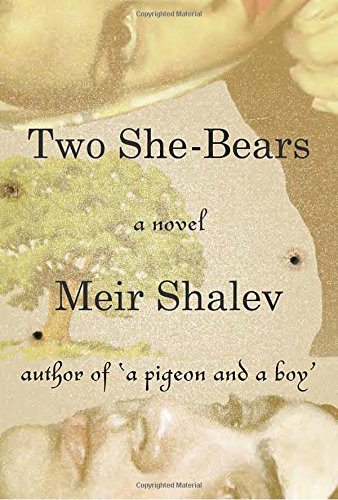
“Is a proclivity to violence and vengeance a gender and/or regional trait? Are the minds of men more than women and/or rural folk more than city dwellers predisposed to violent acts of revenge? Or put another way, are violence and vengeance intrinsic components of the male psyche, and if so are men more likely to resort to them in rural settings? These are the central questions posed by Israeli novelist Meir Shalev in his seventh novel Two She-Bears (in the original Hebrew Shtayim Dubim, Am Oved, 2013).” — the opening paragraph of my review in New York Journal of Books
"... likewise 86 year old Czech-French novelist Milan Kundera’s new work of fiction, The Festival of Insignificance, which was published last week by New York based publisher Harper in Linda Asher’s fine English translation from the Kundera’s French, is a 128 pp. novella that revisits its author’s recurring themes but in a shorter format." -- from my examiner article. Also see my New York Journal of Books review.
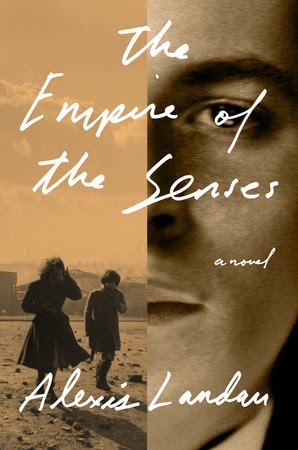
"Alexis Landau’s cinematically descriptive, character-driven debut novel explores ethnic identity via an intermarried family in WWI and Weimar era Germany, i.e. before anti-Semitism became official state policy legally codifying ethnic definitions." -- frommy New York Journal of Books review in which I praise the book as “handsomely written” as well as a “powerful and compelling novel.” My additional remarks and excerpts from the book appear in examiner.com.
Do the coolest brands really deserve their alleged socially responsible reputations? In her new book,Ethical Chic, award winning journalist, author, (friend, fellow shul member,) and Brooklynite Fran Hawthorne investigates six such companies to find out the answer to that and other questions, including:
--Do Starbucks baristas really talk to their customers? (And why did the company cheat the coffee farmers of Ethiopia?)
--Is Trader Joe’s really organic?
--Did Apple know about the conditions at its iPod factory in China?
--Why did Tom’s of Maine sell out to Colgate?
--How does Timberland explain killing all those cows?
--Should we hate American Apparel for its sleaze or applaud it for supporting immigrant rights?
To promote her new book Ms. Hawthorne will be giving two readings this month in Brooklyn:
Wednesday June 20, 2012 at 7:00 PM at Community Bookstore, 143 Seventh Avenue in Park Slope, and
Ms. Hawthorne has been a writer or editor at Fortune, BusinessWeek, Institutional Investor,and other publications. She is the author of three books on health care and investing, including Inside the FDA and Pension Dumping.
This article first appeared on the now defunct examiner.com
It is a fortunate coincidence that today is both International Women's Day and the release date of Marge Piercy's The Hunger Moon: New and Selected Poems 1980-2010 by New York publisher Alfred Knopf. In my review of the latter in New York Journal of Books in addition to mentioning that Piercy is a political and feminist poet, I note, "The Hunger Moon, her second volume of selected poems, a rich selection from the last three decades, ... includes: narrative poems about her childhood in Detroit, young adulthood in Manhattan, everyday life with her husband and cats on Cape Cod where they are year round residents, among other subjects on all of which she is a terrific storyteller; nature poems that describe the fauna and flora of the Cape; love poems, some of which attest to the strength, devotion and passion of her current marriage, while others reflect the pain of less healthy previous relationships, pain that still smarts despite her current conjugal happiness; and religious poems that are popular choices for reading out loud at Jewish life cycle events, some of which are reprinted in “additional readings” anthologies meant to supplement non-Orthodox Jewish prayer books." (source: New York Journal of Books)
HUC awards Marge Piercy an honorary doctorate
margepiercy.com
Hebrew Union College awarded Piercy an honorary doctorate for her liturgical poems. Examples of her Jewish poems include:
The Chuppah
The chuppah stands on four poles. The home has its four corners. The chuppah stands on four poles. The marriage stands on four legs. Four points loose the winds that blow on the walls of the house, the south wind that brings the warm rain, the east wind that brings the cold rain, the north wind that brings the cold sun and the snow, the long west wind bringing the weather off the far plains.
Here we live open to the seasons. Here the winds caress and cuff us contrary and fierce as bears. Here the winds are caught and snarling in the pines, a cat in a net clawing breaking twigs to fight loose. Here the winds brush your face soft in the morning as feathers that float down from a dove’s breast.
Here the moon sails up out of the ocean dripping like a just washed apple. Here the sun wakes us like a baby. Therefore the chuppah has no sides.
It is not a box. It is not a coffin. It is not a dead end. Therefore the chuppah has no walls. We have made a home together open to the weather of our time. We are mills that turn in the winds of struggle converting fierce energy into bread.
The canopy is the cloth of our table where we share fruit and vegetables of our labor, where our care for the earth comes back and we take its body in ours. The canopy is the cover of our bed where our bodies open their portals wide, where we eat and drink the blood of our love, where the skin shines red as a swallowed sunrise and we burn in one furnace of joy molten as steel and the dream is flesh and flower.
O my love O my love we dance under the chuppah standing over us like an animal on its four legs, like a table on which we set our love as a feast, like a tent under which we work not safe but no longer solitary in the searing heat of our time.
Kaddish
Look around us, search above us, below, behind. We stand in a great web of being joined together. Let us praise, let us love the life we are lent passing through us in the body of Israel and our own bodies, let's say amen.
Time flows through us like water. The past and the dead speak through us. We breathe out our children's children, blessing.
Blessed is the earth from which we grow, Blessed the life we are lent, blessed the ones who teach us, blessed the ones we teach, blessed is the word that cannot say the glory that shines through us and remains to shine flowing past distant suns on the way to forever. Let's say amen.
Blessed is light, blessed is darkness, but blessed above all else is peace which bears the fruits of knowledge on strong branches, let's say amen.
Peace that bears joy into the world, peace that enables love, peace over Israel everywhere, blessed and holy is peace, let's say amen.
rating: 3 of 5 stars This is a compelling story which for the most part is conveyed in plain, simple, and often pedestrian prose. No doubt the author decided that the plot was so riveting that the appropriate style should be understated, but I think she took this approach too far. Most of the book could have benefited from the kind of lyricism displayed in its concluding chapters. I am nonetheless glad I read it. I had seen the PBS documentary on the Wright-Borthwick romance, so the events were not a surprise, but the novel did bring them to life. This is not a great book, but its story is worth hearing. In some respects Wright and Borthwick were ahead of their time, but whenever the well being of children is a factor whether to stay or leave a stale marriage remains a difficult dilemma.
rating: 3 of 5 stars This is a compelling story which for the most part is conveyed in plain, simple, and often pedestrian prose. No doubt the author decided that the plot was so riveting that the appropriate style should be understated, but I think she took this approach too far. Most of the book could have benefited from the kind of lyricism displayed in its concluding chapters. I am nonetheless glad I read it. I had seen the PBS documentary on the Wright-Borthwick romance, so the events were not a surprise, but the novel did bring them to life. This is not a great book, but its story is worth hearing. In some respects Wright and Borthwick were ahead of their time, but whenever the well being of children is a factor whether to stay or leave a stale marriage remains a difficult dilemma.
I am reading and enjoying a prepublication copy of Best Sex Writing 2009 which I have agreed to review on Amazon. These are notes on the first ten chapters for that eventual review. BSW 2009 is an anthology of articles about sex; while a few articles refer to sexual encounters they are not erotic. These articles will not arouse you but they will engage your intellect and present a panoramic portrait of sex in America in the middle years of the first decade of the 21st century.
![[personal profile]](https://www.dreamwidth.org/img/silk/identity/user.png)





![Reblog this post [with Zemanta]](https://p2.dreamwidth.org/0bd70782cabb/624040-1103330/img.zemanta.com/reblog_e.png?x-id=1ba6dc38-e8be-4f31-8c26-f2ab6d1637f8)

