davidfcooper: (Default)

A week ago National Book Critics Circle announced its 2021 nominees in multiple categories (see link below). For the second year in a row I am a judge of the John Leonard Prize for a first book, and I have known which titles are finalists for that prize for several weeks but was not at liberty to share that information until a week ago. Last year there were seven finalists of which I had already read all five fiction titles and knew which of those I thought was superior to the others (reading the non-fiction titles did not change my estimation), and in the end my fellow judges agreed and awarded the 2020 Leonard Prize to Luster by Raven Leilani.


The 2021 John Leonard Prize finalists are


Ashley C. Ford, Somebody’s Daughter (Flatiron Books)


Jocelyn Nicole Johnson, My Monticello (Henry Holt)


Torrey Peters, Detransition, Baby (One World)


Larissa Pham, Pop Song (Catapult)


Anthony Veasna So, Afterparties (Ecco)


Devon Walker-Figueroa, Philomath (Milkweed Editions)


and it will be a far more difficult decision. Going in I had read two of the six titles, and now that I have read five and am reading the sixth, I find that I will have to reread some of them to decide which will get my vote. So for now I recommend adding all six to your TBR lists. Of the finalists in the other categories the only one I've read is Second Place by Rachel Cusk, which I also recommend.


2021 National Book Critics Circle Awards Finalists

davidfcooper: (Default)


This past winter I was one of 30 judges of the National Book Critics Circle’s John Leonard Prize for a first book. In March NBCC announced that the book I voted for, Luster by Raven Leilani, won the Leonard Prize. One of my fellow judges, Natalie Bakopoulos says, “On behalf of the NBCC membership, we are honored and delighted to present the John Leonard Prize to Raven Leilani for her brilliant novel, Luster. Luster’s artistry, wit, and narrative surprises make it a tremendous achievement, and its tender and raucous prose mirrors the narrator’s tender and raucous self.” Leonard judge Adam Dalva adds, “Luster is a compulsive book—compulsive to read, with compulsive, complex characters—that brilliantly captures the essence of its lead, Edie. She is a wonderfully depicted swirl of painting, video games, and longing.”


Other 2020 NBCC winners include Nicole R. Fleetwood, who won the criticism award for Marking Time: Art in the Age of Mass Incarceration (Harvard Univ. Press). Committee chair J. Howard Rosier calls the book “Profoundly revisionist,” as it “identifies the conditions under which incarcerated persons create art and taxonomizes its making.”


francine j. harris was awarded the poetry prize for Here Is the Sweet Hand (Farrar, Straus and Giroux), which, judge Megan Labrise says, gives the reader a “gentle caress, a gut punch, a come-hither curved finger, a rib-tickler, and a stop-sign palm,” sometimes “all five at once.” By “exploring femininity, blackness, queerness, nature, and institutions (political, academic, and disciplinary),” Labrise says, these poems “have the power to move.”


Cathy Park Hong won the prize in autobiography for Minor Feelings: An Asian American Reckoning (One World). Committee chair Marion Winik says, “Hong’s endlessly interesting blend of personal storytelling and cultural criticism digs into the personal to find the political, untangling the knots of privilege, envy, dissatisfaction, humiliation, and difference.”
The winner in the fiction category is Hamnet by Maggie O’Farrell (Knopf), in which the author imagines Shakespeare’s son Hamnet’s death from bubonic plague, lonely and agonizing yet marked by courage. O’Farrell “brings the boy so vividly to life the reader is stricken by his loss,” says judge Colette Bancroft.


The biography prize went to Stranger in the Shogun’s City: A Japanese Woman and Her World by Amy Stanley (Scribner). “Through the life of one persistent, defiant woman, Amy Stanley reveals the sweep of 19th century Japan, how the tiny fishing village of Edo became the global city Tokyo,” says committee chair Elizabeth Taylor.


Nonfiction recipient Tom Zoellner’s Island on Fire: The Revolt That Ended Slavery in the British Empire (Harvard Univ. Press) “engagingly excavates shrouded history,” says judge Carlin Romano, to show how “heroic Jamaican freedom fighters catalyzed the end of slavery in the British Empire,” and in the process “restores these martyrs to their rightful place in the pantheon of justice.”


The recipient of the 2020 Nona Balakian Citation for Excellence in Reviewing, given to an NBCC member for exceptional critical work, was Jo Livingstone, culture staff writer at the New Republic, where they primarily contribute book criticism in addition to film and music coverage. Their writing has also recently appeared in the New York Times, the Times Literary Supplement, and Bookforum. Committee chair Colette Bancroft says, “Livingstone submitted a collection of three reviews of books that ranged from Samantha Irby’s earthy and hilarious personal essays to Christopher Chitty’s deeply researched history of the relationship between sexuality and capital, with a bounce into the thorny autofiction of the latest Martin Amis novel. In each case Livingstone brought to bear keen intelligence, wide-ranging knowledge, surprising perceptions and beautiful writing.”


The recipient of the Ivan Sandrof Lifetime Achievement Award was The Feminist Press. For 50 years, the Feminist Press has been at the forefront of activism for women’s equality. The Feminist Press started by publishing influential works that had been out of print, including, crucially, Charlotte Perkins Gilman’s The Yellow Wall-Paper, now widely considered a classic of American literature. Over the years, they’ve published books by Anita Hill, Grace Paley, Barbara Ehrenreich, and Pussy Riot. They also publish Women’s Studies Quarterly, the influential journal that was established by the press in 1972. They remain on the vanguard of the feminist movement, and continue to publish essential works of American and international literature, including recent critically acclaimed books by Emily Hashimoto and Juliana Delgado Lopera, an unearthed classic by Harlem Renaissance writer Dorothy West, and one of this year’s finalists in the NBCC’s criticism category, Grieving by Cristina Rivera Garza. Committee chair Michael Schaub says: “[The Press’s] mission statement reads, ‘Celebrating our legacy, we lift up insurgent and marginalized voices from around the world to build a more just future,’ and that’s exactly what they’ve done. Their literature over the past five decades has made the world a better place for everyone.”


All 2020 NBCC prize winners are listed here: https://www.bookcritics.org/awards/ #Bookcritics.org #leonardprize

davidfcooper: (Default)


“... readers will enjoy this funny, imaginative, and handsomely crafted novel first and foremost as a memorable work of literature, and as such it deserves to reach a wide audience.” -- From my review of Muck by Dror Burstein in New York Journal of Books
davidfcooper: (Default)
"South African born Jewish-Canadian author Kenneth Bonert’s sophomore effort The Mandela Plot is a sequel to his multiple awards winning debut novel The Lion Seeker (also reviewed on NYJB) that continues the Helger family saga begun in the earlier volume in a rather dark combination coming of age story and political thriller. A concluding epilogue in the final fifth of the novel includes commentary on post-Apartheid South Africa in general and the predicament of its Jewish citizens in particular." -- From my review of The Mandela Plot by Kenneth Bonert in New York Journal of Books 


davidfcooper: (Default)
"Readers who devoured In the Illuminated Dark will welcome the additional poems in Late Beauty, and for readers unacquainted with Ruebner’s poetry Late Beauty provides a portal." -- From my review of Late Beauty: Selected Poems of Tuvia Ruebner translated from the Hebrew by Lisa Katz and Shahar Bram in New York Journal of Books


davidfcooper: (Default)
"well written, masterfully translated by Jessica Cohen, and rewards rereading." -- From my review of The Diamond Setter by Moshe Sakal in New York Journal of Books


davidfcooper: (Default)
"Petty Business, the second of Yirmi Pinkus’ five novels and the first to be published in English, satirically portrays the life of a family of Tel Aviv store owners with both fondness and humor over one year—1989, a time in which neighborhood mom and pop stores were being put out of business by larger chain and department stores, just as the latter are now under pressure from Internet vendors.

"... The novel’s title in the original Hebrew edition is the Aramaic phrase Bi’zer Anpin, which means 'on a small scale, in miniature,' and this family and their enterprises are a microcosm of a lower-middle class retail subculture at the end of an era.

"Overseas Pinkus is better known as cartoonist, and his book cover illustration of bathers in the waterpark swimming pool provides a preview of his satirical take on that subculture whose narrative portrait is also poignant. Pinkus’ mastery of language is every bit equal to that of his visual medium, and translators Evan Fallenberg and Yardena Greenspan do a fine job of conveying his varied prose into English." -- from my review of Petty Business by Yirmi Pinkus in New York Journal of Books

description
davidfcooper: (Default)
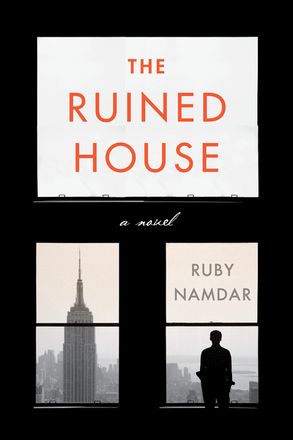
"One of the lessons this complicated book conveys is how difficult it is to achieve the golden mean, balancing a serious writer’s need for solitude to reduce distractions with the need to stay connected and involved with one’s family and loved ones on the one hand, and integrating knowledge and appreciation for global culture with an intimate involvement with one’s particular tradition and civilization on the other. If the consequences of failing to achieve those balances are not as dire for most of us as they are for Andrew, nonetheless many of us would benefit from a closer examination and recalibration. Extending the metaphor on a national and international scale to include the 9/11 attack may seem like a stretch, or is it?" -- From my review of The Ruined House by Ruby Namdar in New York Journal of Books


The Ruined House book cover
davidfcooper: (Default)
"Though Moving Kings is considerably shorter and more accessible—with less erudite but nonetheless stimulating vocabulary, similes, and fewer stream of consciousness run-on sentences—than Cohen’s previous novel Book of Numbers (also reviewed on NYJB) it, too, skillfully weaves descriptive character portraits and plot lines into a novel of ideas that addresses issues as diverse as capitalism, gentrification, army veterans, the IDF’s conduct in the West Bank, and Jewish identity with sharp sardonic humor." -- from my review in New York Journal of Books


movingkingsbookcover

Also see Lit Hub's interview with Cohen about the novel
davidfcooper: (Default)


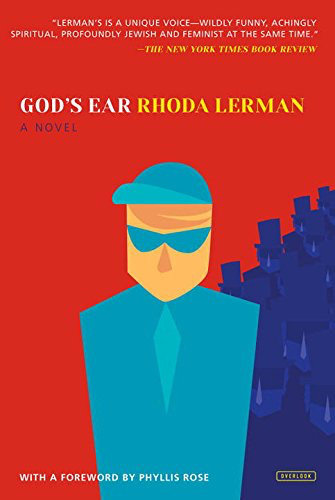
Lerman’s sense of humor has been compared to that of Philip Roth (who is three years her senior), but in God’s Ear the humor also employs the traditional Jewish irony and Eastern European Jewish folklore of Isaac Bashevis Singer, especially his short stories. Most of Lerman’s Hasidic folktales in God’s Ear are too long to quote, but the following paragraph gives a taste of her wit:

“Totte, you hear about the old Jew who walked into the SS recruiting office before the war? He comes in half-blind, crippled, palsied. He goes up to the Nazi recruiter and says, ‘I just came in to tell you, on me you shouldn’t count.’” -- from my review of God's Ear by Rhoda Lerman in New York Journal of Books


Throughout the book one can’t help admiring Assadi’s handsome prose, such as this excerpt from a page long paragraph:

“Sometimes I cannot locate any one night as if my life in New York were but a flood of nights. An eternal room of empty wine bottles, ashtrays overflowing, the maze of screeching trains, Laura at the window, Dylan and his parties, filled with fur and cocaine and moderate celebrity, and the cab rides home, the drunken swipes of credit cards with fifteen-dollar balances behind drivers whose faces I never remembered come morning, dinners with Laura alone, Thai food, not finishing our plates, ordering more to drink, someone at the piano, someone holding the guitar, strumming chords, singing songs, concerts in the beginning, neon flashing, rich acquaintances in Soho lofts, next stop Williamsburgh, living in the dark, living in the night, making it through the day only to afford the night.” -- from my review of Sonora by Hannah Lillith Assadi in New York Journal of Books 

davidfcooper: (headshot 01/18/07)


"At first glance Israeli novelist David Grossman’s new novel, A Horse Walks into a Bar, which as the title suggests recounts a stand-up comedian’s performance one evening at a night club in the coastal city Netanya, appears to be a complete change in tone and direction from his previous two fiction books To the End of the Land and Falling Out of Time (the latter reviewed on NYJB), emotionally heavy works that either indirectly or directly deal with parental grief.

"But initial appearances can be deceiving, and though the new novel is seasoned with jokes it is a serious work that addresses emotional pain as a source of all art, even a genre as coarse and vulgar as stand-up comedy." -- from my review in New York Journal of Books

"Ayelet Gundar-Goshen’s (One Night, Markovitch) second novel Waking Lions starts as a moral drama in its first 14 chapters and becomes a suspenseful crime thriller in its final 11. Its strength lies in its third person narration’s shifting perspectives that develop its characters’ backstories and dramatic situations in the first part and its page turning pacing in the second part, in which the novel’s unanswered questions are resolved." -- from my review in New York Journal of Books
davidfcooper: (headshot 01/18/07)
"With its universal themes of healing, recovery, creativity, and finding one’s vocation The Man Who Never Stopped Sleeping should engage the wide readership Appelfeld’s prose deserves. Readers may want to buy extra copies and donate them to VA hospitals." -- from my review in New York Journal of Books.
davidfcooper: (headshot 01/18/07)
recitationbookcover

"After two novellas translated into English (Nowhere to be Found, 2015 and A Greater Music, 2016, the latter reviewed in NYJB) South Korean post-modernist fiction writer Bae Suah and British translator Deborah Smith—who also translated A Greater Music and two novels by Han Kang (The Vegetarian and Human Acts)—return with an even more ambitious full length novel, Recitation, a novel of ideas with frequent philosophical digressions that further develops A Greater Music’s theme of living abroad while also addressing globalization, racial identity, and intolerance. It is a challenging yet cognitively engaging and rewarding read.

"... This is not a book for lazy readers; Bae expects us to show up ready to work. Her handsome prose, however, is never an obstacle.

"... Recitation will make Bae’s anglophone readers and other fans of post-modern fiction eagerly await the publication of more of her novels in English."
-- from my review in New York Journal of Books
davidfcooper: (headshot 01/18/07)
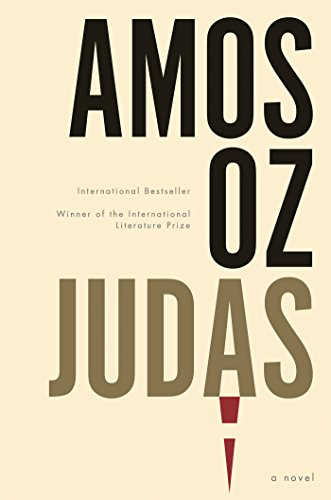
“For Oz’s fans and liberal Zionist fiction readers Judas is a required text whose writing is its own reward.” -- from my review of in New York Journal of Books

judasbookcover
davidfcooper: (headshot 01/18/07)
"Bae’s prose alternates between detailed descriptions of everyday life and ruminative passages on music, ideas, and her character’s mental state. The late American poet William Matthews once described his taste in literature as a preference for prosy poetry and poetic prose. A Greater Music exemplifies the latter category; it requires and amply rewards rereading." -- from my review in New York Journal of Books 

agreatermusicbookcover

davidfcooper: (headshot 01/18/07)

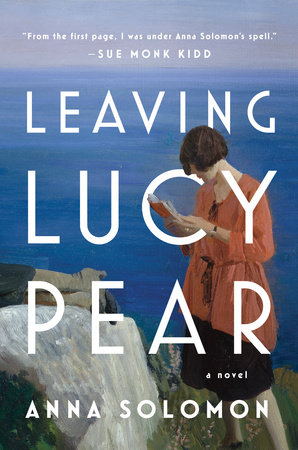
" Leaving Lucy Pear is recommended to readers who enjoy historical fiction, a cast of well developed mainly female characters, and handsome prose." -- from my review in New York Journal of Books

leavinglucypearbookcover.jpg

davidfcooper: (headshot 01/18/07)
The Lost Civilization of Suolucidir by Susan Daitch
The Lost Civilization of Suolucidir
by Susan Daitch

1532226

“After reading The Lost Civilization of Suolucidir readers will want to start over again to see what details they may have missed the first time through, and yes, this richly crafted and handsomely written novel rewards rereading. It also demonstrates that an ironic post-modern novel of ideas can be suspenseful and include complex characters readers can care about while feeling powerless to alter their fates.” — from my review of The Lost Civilization of Soulucidir by Susan Daitch in New York Journal of Books

Read an excerpt of the novel here.
davidfcooper: (headshot 01/18/07)

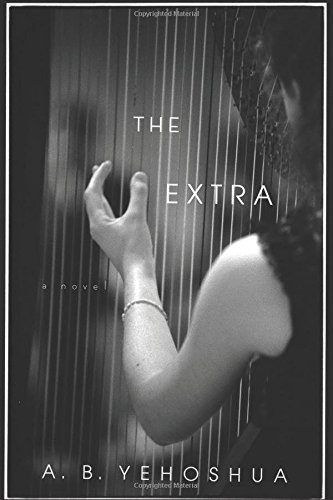
theextraabyehoshuaAbraham_Jehoshua_Yehoshua


"On the surface the new novel is about feminism and the right of women to choose not to bear children. But an underlying theme is whether liberal nationalism is an oxymoron, whether the rights of the individual (the essence of liberalism) can be reconciled with the needs of the nation." -- from my New York Journal of Books review of The Extra by Abraham B. Yehoshua. For an excerpt from the novel see my examiner article.

davidfcooper: (headshot 01/18/07)
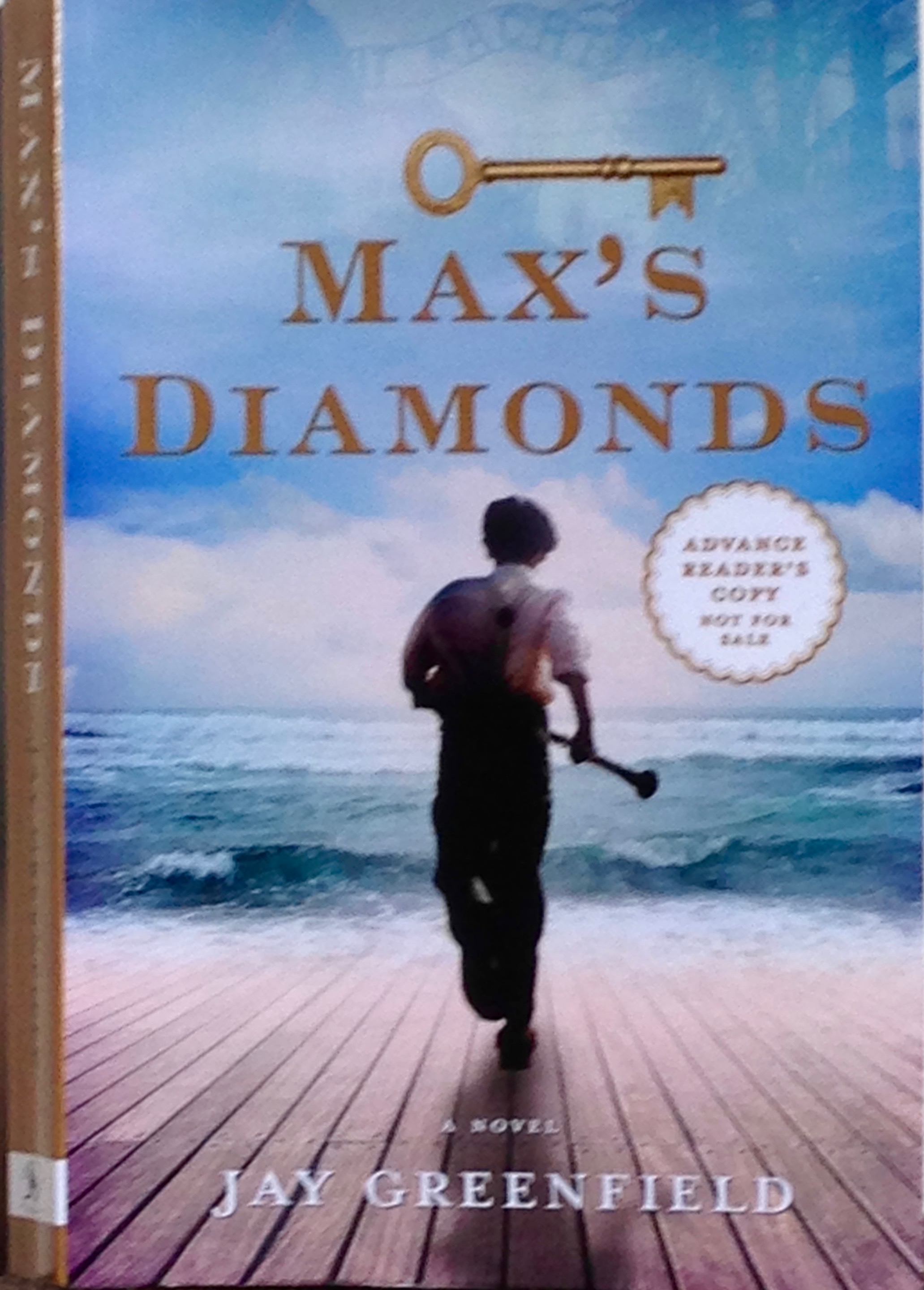
maxsdiamondsbookcover

"Max’s Diamonds, Jay Greenfield’s debut novel published last week by New York publisher Chickadee Prince Books, is a guilty pleasure, a book I enjoyed and could barely put down for its suspenseful serpentine plot despite its pedestrian and occasionally heavy-handed prose." -- From my examiner article. Also see my New York Journal of Books review, which concludes "with Max's Diamonds readers are rewarded with a fun and absorbing read whose fortuitous May publication date makes it a felicitous beach or airplane book."
davidfcooper: (headshot 01/18/07)
GluedToTheSkypulpbitscover

My poetry book Glued To The Sky is now also an audiobook. Glued To The Sky includes both narrative and lyric poems concerning group identity and gender issues in a wide variety of forms. Glued To The Sky was published by PulpBits in 2003. Sadly, PulpBits went out of business in 2007. An ebook version of Glued To The Sky in the pdf format can be downloaded at davidfcooper.com

Profile

davidfcooper: (Default)
davidfcooper

January 2022

S M T W T F S
      1
2345678
9101112131415
16171819202122
23242526 272829
3031     

Syndicate

RSS Atom

Most Popular Tags

Style Credit

Expand Cut Tags

No cut tags
Page generated Apr. 12th, 2026 11:47 pm
Powered by Dreamwidth Studios